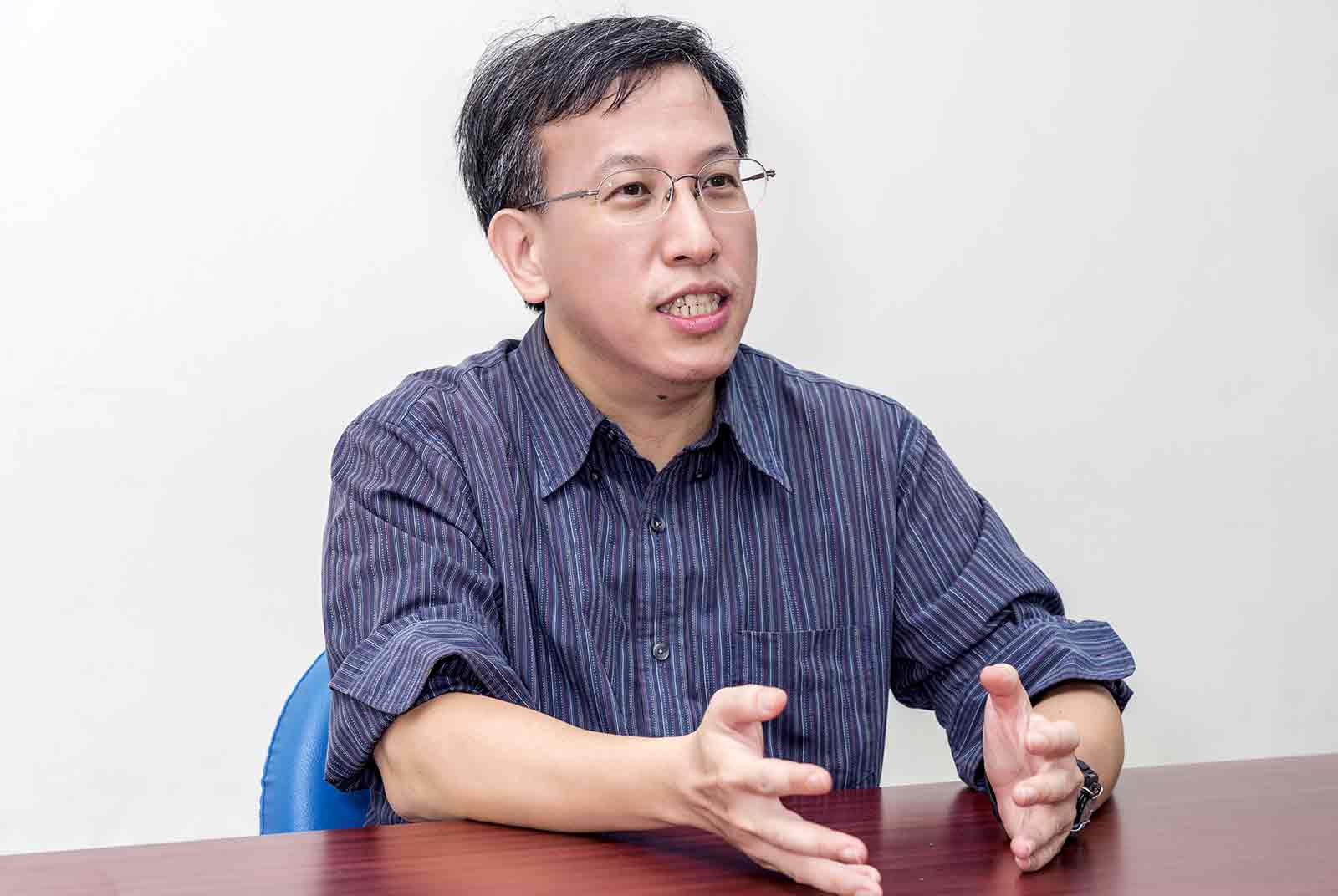
恭喜李宏毅副教授榮獲中華民國第 59 屆十大傑出青年選拔獎<科學及技術研究發展類>
恭喜李宏毅副教授榮獲中華民國第 59 屆十大傑出青年選拔獎<科學及技術研究發展類>
在教學和研究上貫徹AI for AII的信念,華人世界影響最多學子的AI傳道者,線上教學內容打破語言與時空限制,讓AI聽懂世界上所有人的語言。
相關連結
JCI TOYP Taiwan 中華民國十大傑出青年選拔委員會


恭喜李宏毅副教授榮獲中華民國第 59 屆十大傑出青年選拔獎<科學及技術研究發展類>
在教學和研究上貫徹AI for AII的信念,華人世界影響最多學子的AI傳道者,線上教學內容打破語言與時空限制,讓AI聽懂世界上所有人的語言。
相關連結
JCI TOYP Taiwan 中華民國十大傑出青年選拔委員會

賀!本中心 「未來科技獎」入圍團隊!
入圍名單:
詳見「2021未來科技獎」官方網站
https://www.futuretech.org.tw/futuretech/index.php?action=brands_detail&br_uid=269
「2021未來科技獎」獲獎及入圍參展技術清單
「2021未來科技獎」線上展
https://www.futuretech.org.tw/futuretech/index.php?action=brands_detail&br_uid=267
賀!本中心成員王偉仲教授「未來科技獎」獲獎!

參展技術名稱:心包膜/主動脈分割及心血管風險 自動分析一站式 AI 模型 (HeaortaNet)
計畫(總)主持人及共同主持人:王宗道、王偉仲、李文正、李文宗、曾秋旺
詳見「2021未來科技獎」官方網站
https://www.futuretech.org.tw/futuretech/index.php?action=brands_detail&br_uid=269
「2021未來科技獎」獲獎及入圍參展技術清單
「2021未來科技獎」線上展
https://www.futuretech.org.tw/futuretech/index.php?action=brands_detail&br_uid=267
賀!本中心成員徐宏民教授「未來科技獎」獲獎!
參展技術名稱:基於互動感知的自動化物件偵測學習
計畫(總)主持人及共同主持人:徐宏民
詳見「2021未來科技獎」官方網站
https://www.futuretech.org.tw/futuretech/index.php?action=brands_detail&br_uid=269
「2021未來科技獎」獲獎及入圍參展技術清單
「2021未來科技獎」線上展
https://www.futuretech.org.tw/futuretech/index.php?action=brands_detail&br_uid=267

📌日期 : 2020.12.19
📌原文連結
「你現在有多痛?」走入急診室,滿間都是哀嚎的患者,但光是做檢傷分類往往就要耗去許多時間,台大率全國之先,找來機器人進駐急診室幫忙,機器人透過觀察患者臉部的表情線條、臉色,來判讀疼痛指數,最快2分鐘內就能完成,幫忙解決急診室壅塞困境。
依臉部扭曲線條、唇色判斷
全台每年急診就醫件數從2006年568萬件增加到2016年689萬件,突顯急診壅塞問題越來越嚴重。台大醫院急診部與台灣大學資工系合作,發展出人工智慧的電子化檢傷系統,以人臉辨識判斷疼痛指數。
台大醫院急診部主任黃建華表示,急診檢傷分類須看心跳、血壓、體溫,也要看疼痛,若疼痛超過8分就要自動升一級。疼痛有兩大意義,除了表示病人很希望趕快改善不舒服,也可能顯示身體疾病嚴重,醫護人員必須幫忙提高病人的舒適度,也要快速瞭解他病況的危急性。
急診醫學部王暉智表示,過去檢傷分類,需靠資深優秀的護理師才有辦法,但若遇到人多繁忙,就會有精神狀況不好或是疏忽的時候,靠機器人協助,則能降低疏漏風險,提高病人安全,藉此警示醫護人員,優先處理緊急的患者。
機器人要怎麼判斷疼痛指數?王暉智說,可從患者有沒有愁眉苦臉,例如臉部扭曲線條、嘴唇顏色、或是臉部是否蒼白等表情細節來辨識,同時分析病人主述、病例、生命徵象的資料,經過深度學習模型,自動產生疼痛指數及檢傷分類的建議。
未來台大醫院的智慧急診願景,更希望能做到機器人也能主動看病、與患者對話、判讀X光,提供醫生加速診斷加速了解病人病況是否建議出院、緊急事件準確預測,希望可以改善急診流程,都能夠縮短時間而且判斷更正確,推動智慧急診的方向。
衍生醫學倫理 待立法規範
不過,AI衍生出的醫學倫理與法律層面問題,還有很多有待釐清與立法規範,例如在診療過程出問題的時候,到底是醫師、醫院、還是系統研發者的責任?台大也表示,國內也須因應AI時代來臨,加快立法腳步。
發佈日期 : 2020/12/19
發稿單位 : 中時新聞網

2020台灣醫療科技展,本中心與臺大醫院智慧急診共同舉辦之「集點填問卷抽大獎」活動,中獎名單出爐囉!
📌首獎:ASUS筆記型電腦ROG Strix G15 G512LU一台(市價44,900元)一台
中獎人:
📌二獎:ASUS智慧手錶VivoWatch SP(市價10,900)五支
中獎人:
📌三獎:臺大醫院及臺灣大學紀念品(市價1,080元)25份
中獎人:
恭喜以上中獎人!
本中心將後續以Email與簡訊或電話通知,敬請務必回覆並提供相關所需資料,以利獎品領取及相關稅務事宜。
另提醒,本活動進行當下,您已同意以下事項:
敬請於12/21 23:59前回覆,逾期將放棄得獎資格,不得異議。
若有任何問題,請聯繫
張先生: yoyuchang@ntu.edu.tw
抽獎注意事項:
台大發展「智慧急診」 電子檢傷只要2分鐘
📌日期:2020.12.03
📌原文自由時報連結
「台大醫院與台灣大學發展「智慧急診」系統,台大資工系教授傅立成、台大醫院急診醫學部主任黃建華、台大醫院急診醫學部醫師蔡居霖共同研發電子檢傷系統,透過人臉辨識,就能進行檢傷中的疼痛分類,準確率達8成以上,預計該系統最快會在2022年正式導入台大醫院急診室。」

台灣醫療科技展 台大擬將AI導入急診診斷 (中央社 2020/12/3)
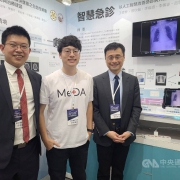
「人工智慧導入醫療診斷已成國際趨勢,台大醫學影像與數據人工智慧實驗室(MeDA)主持人王偉仲與台大急診團隊研發出「PXR即時危險自動偵測系統」。王偉仲說,急診患者正因情況緊急,醫師必須在短時間內消化大量資訊、做出診斷,但以往光是照X光到判讀完畢,至少就得花40到60分鐘。
王偉仲指出,未來有了這套系統,醫護人員只要利用可攜式X光機拍下患者影像,就能透過無線網路直接傳送到醫師隨身攜帶的行動裝置,同時透過AI判讀是否為鼻胃管、氣管內管、中央靜脈導管錯置,還是有肺結核、氣胸或肺炎,讓醫師診斷更快更精準,預計明年中旬前將導入臨床使用。」

✅黃建華主任研究團隊計畫介紹:
http://mahc.ntu.edu.tw/research_view.php?id=18
✅王偉仲教授研究團隊計畫介紹:
http://mahc.ntu.edu.tw/research_view.php?id=5


📌日期:2020-12-03
📌原文連結
台灣醫療科技展登場,聚焦科技防疫、人工智慧及細胞治療。新光醫院運用科技監控疑似個案生理參數,降低醫護感染風險;花蓮慈濟宣布展開脊損患者細胞治療,患者可望擺脫輪椅。
2020年台灣醫療科技展在南港展覽館登場,由550個機構與企業、150個新創團隊攜手展出醫療健康新科技,綜觀全台各大醫院展區,主要聚焦在科技防疫、人工智慧及細胞治療3大亮點。
科技防疫方面,新光醫院導入非接觸式生理照護系統,可即時監測病人心跳、體溫等健康狀況。新光醫院副院長洪子仁表示,今年武漢肺炎(2019冠狀病毒疾病,COVID-19)疫情延燒以來,所有疑似個案都須收治在隔離檢疫病房,醫護人員為了替病人量體溫、給藥,一天至少要進出病房12到15次,每進出一次就得耗費一套約千元的隔離衣。
洪子仁說,3月導入這套系統後,系統會自動監測病人心跳、體溫,一旦有異常也會發出警訊,將進出病房次數降至6到7次,若病人離床時間過久也能即時發現,避免發生意外,並降低醫護人員感染風險。
疫情期間,各大醫院不得不耗費大量人力,管理病人旅遊史、訪客實聯制、監測體溫與口罩等,因此台北醫學大學附設醫院12月啟用「零接觸智慧防疫自助機」,協助醫療院所完成第一線門禁管制功能。
因應疫情期間遠距醫療需求,彰化員榮醫院以5G智慧眼鏡替蒙古弱勢病患進行遠距醫療,讓遠在台灣的醫護人員可以透過蒙古醫師第一人稱視角,了解患者狀況,並協助做出診斷,預計年底將運用5G智慧眼鏡,以視訊方式進行台蒙義診、會診及醫療會議。
人工智慧導入醫療診斷已成國際趨勢,台大醫學影像與數據人工智慧實驗室(MeDA)主持人王偉仲與台大急診團隊研發出「PXR即時危險自動偵測系統」。王偉仲說,急診患者正因情況緊急,醫師必須在短時間內消化大量資訊、做出診斷,但以往光是照X光到判讀完畢,至少就得花40到60分鐘。
王偉仲指出,未來有了這套系統,醫護人員只要利用可攜式X光機拍下患者影像,就能透過無線網路直接傳送到醫師隨身攜帶的行動裝置,同時透過AI判讀是否為鼻胃管、氣管內管、中央靜脈導管錯置,還是有肺結核、氣胸或肺炎,讓醫師診斷更快更精準,預計明年中旬前將導入臨床使用。
國泰醫院則在急診導入敗血症智慧決策作業系統,透過病人生命徵象、查核表,算出敗血症引發器官衰竭風險,據醫院統計,導入這項AI系統後,可將病人總住院時數從240小時降至228小時,急診敗血症病人死亡率從18.5%降至5.7%。
很多人就醫面對醫師一連串衛教後,回到家常不知如何向家人再說一遍,林口長庚醫院眼科開發出「AI智慧語音衛教」系統,透過遠距平台強化衛教溝通。
細胞治療方面,花蓮慈濟醫院院長林欣榮宣布獲衛生福利部核准,將針對脊髓損傷患者展開自體骨髓間質幹細胞治療計畫,根據國外臨床試驗,有高達50%機會幫助全癱患者,讓脊損患者有機會擺脫一輩子坐輪椅的命運。
高雄醫學大學附設醫院近來建置南台灣首家細胞治療中心,病人不必再遠赴外縣市或國外求醫。

把握黃金搶救時間!以AI打造未來急診室,改善急診壅塞現象
📌日期:2020.11.30
📌原文連結
想像一下未來的急診室,病患一進到急診室後,醫師就收到病患的過去病史、來醫院前的救護處理步驟,即時偵測生命徵象是否危險。接著,醫護團隊為病患量測和檢驗體溫、血壓、X光、血氧等生理資訊,結果出爐後,電腦自動顯示醫學判斷建議,醫師快速掌握病患的病況,在最短的時間內初步治療。
系統持續追蹤病患的情況,需要住院者以最快速度移至空病床休養,已經能出院者亦可即時收到出院通知。減少病患大量等待的時間,得到醫護團隊更精準的醫療照顧,更減輕醫護團隊負擔,讓醫病關係更加友善。
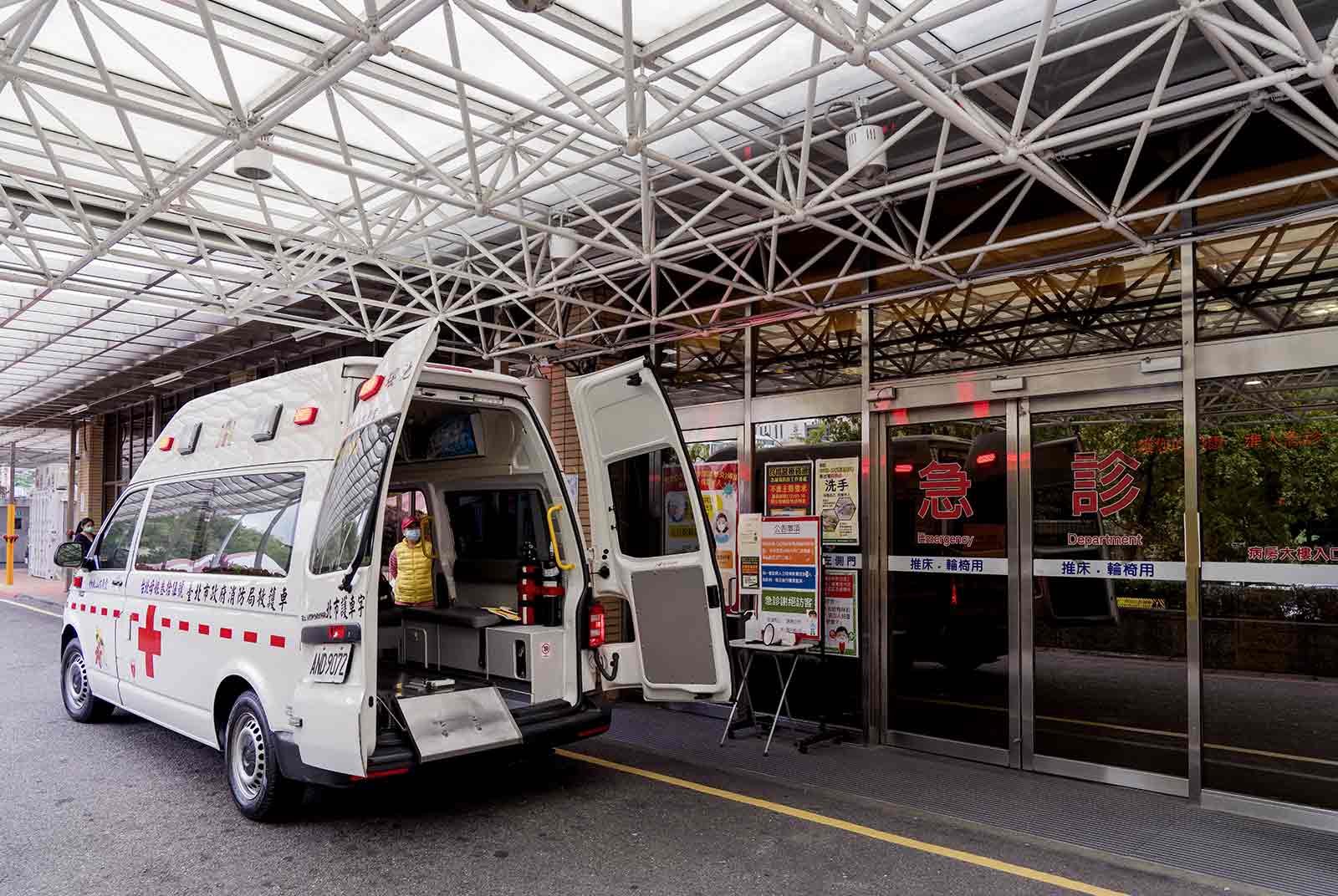 臺大醫院急診部
導入AI使得就醫流程更加順暢
要改善急診壅塞現象,就醫流程暢通無阻,急診室必須採用智慧急診模式,背後的關鍵就是AI!
根據美國疾管局的資料,約50%醫院急診部皆遭遇急診壅塞、醫護資源不足以應付的窘境。然而在臺灣亦有同樣的景況,臺大醫院急診室長年面臨急診壅塞現象,早已超過醫護團隊的負荷,導致病患就醫流程不順,等待時間過久,醫護團隊勞心勞力,在極短時間內就要做出診斷決策,形成惡性循環。此外,急診室往往面臨無法適當監控病情的非預期事件,例如不預期心跳停止,或是在入住加護病房、急診過程中死亡等現象,急需急診警示系統。
「急診很需要AI!」臺大醫院急診醫學部部主任黃建華指出,急診室有資訊化系統,但在時間緊湊的情況下,病人診斷千百萬種情況,醫師要在五分鐘內判斷病患的情況,挑戰很大。他說,「人腦記不得這麼多資訊,但AI可以。AI能整合大量資訊,提供急診醫師輔助決策建議。」
智慧急診能節省時間、有效利用空間、改善病患就醫流程,透過病患身上佩戴的手環所蒐集到的生理資訊,結合監控系統和護理師輸入的資訊,例如護理師註記「血壓低」、「臉色蒼白」,AI就能根據現有資訊快速分析,把可能的疾病風險標示出來。
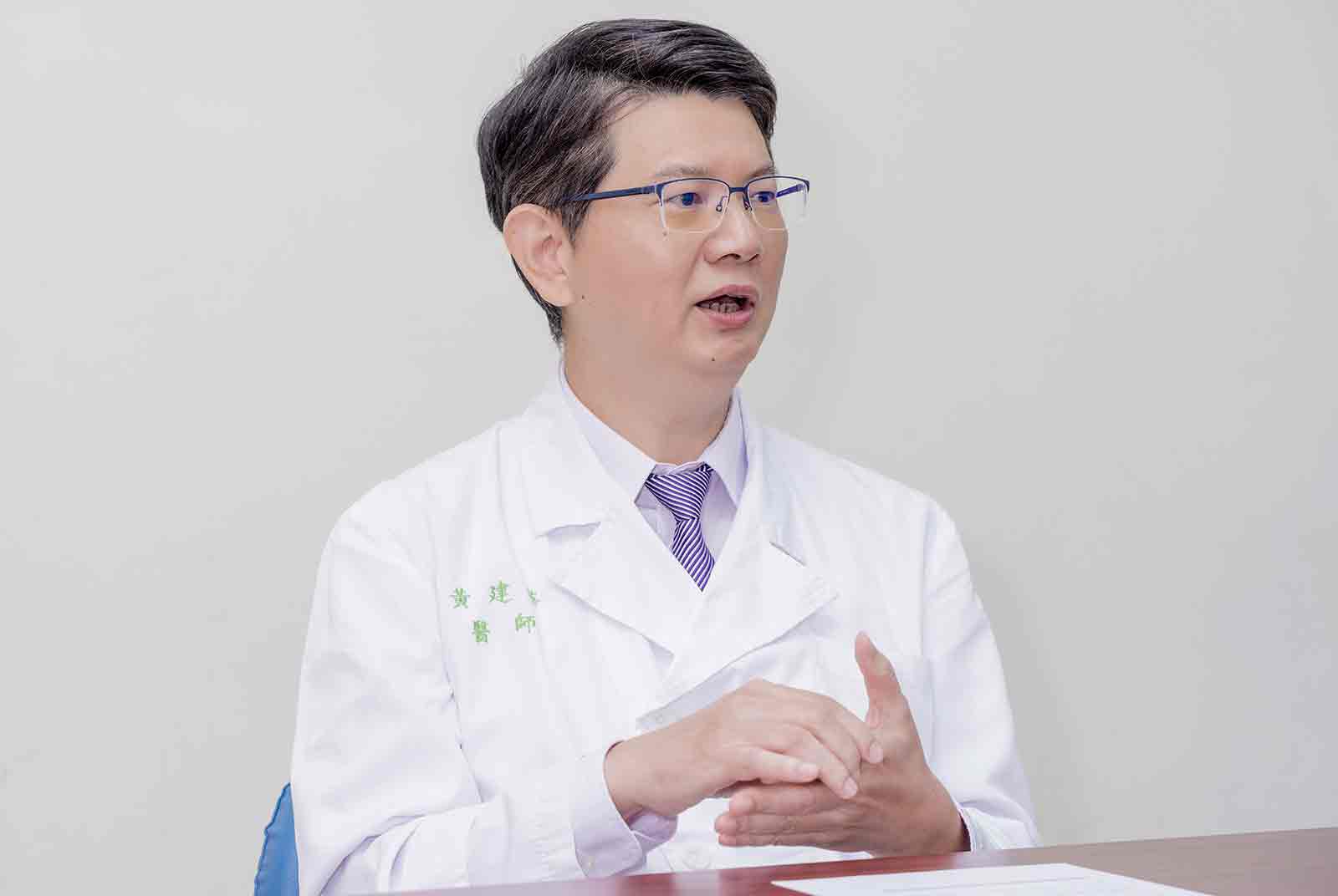 臺大醫院急診醫學部部主任黃建華指出,「透過AI,能整合大量資訊,提供急診醫師輔助決策建議。」
臺大醫院急診醫學部副主任及督導楊蓓菁亦分享護理實務經驗,過去護理師得手寫病歷及手寫核對藥單,並手動將病患的血壓、體溫等生理資訊輸入系統,但實務上可能因忙碌而未即時輸入資訊,也可能有輸入錯誤的情況。
有了AI幫忙,量測完生理資訊後直接上傳,醫師即時收到訊息,再透過醫護溝通平台即時聯絡,結合臨床檢視系統,危急情況自動發訊息給主治醫師,醫師就能立刻治療處置。楊蓓菁副主任指出,「AI讓急診過程能被醫護人員掌控,縮短病患就醫流程,醫護人員將能有更多時間與病患溝通及衛教。」
臺大醫院急診醫學部專任主治醫師王暉智分析,臺大醫院資訊系統行之有年,2008年之後全面電子化,系統早已設置許多防錯機制,例如藥物劑量異常警示,或可避免護理師重複給藥。
然而,要做到智慧急診模式,系統需要具備思考邏輯和判斷能力,要讓AI進一步學習資深醫師的醫學判斷及敘述病情的方式,才能協助醫師做更好的判斷。
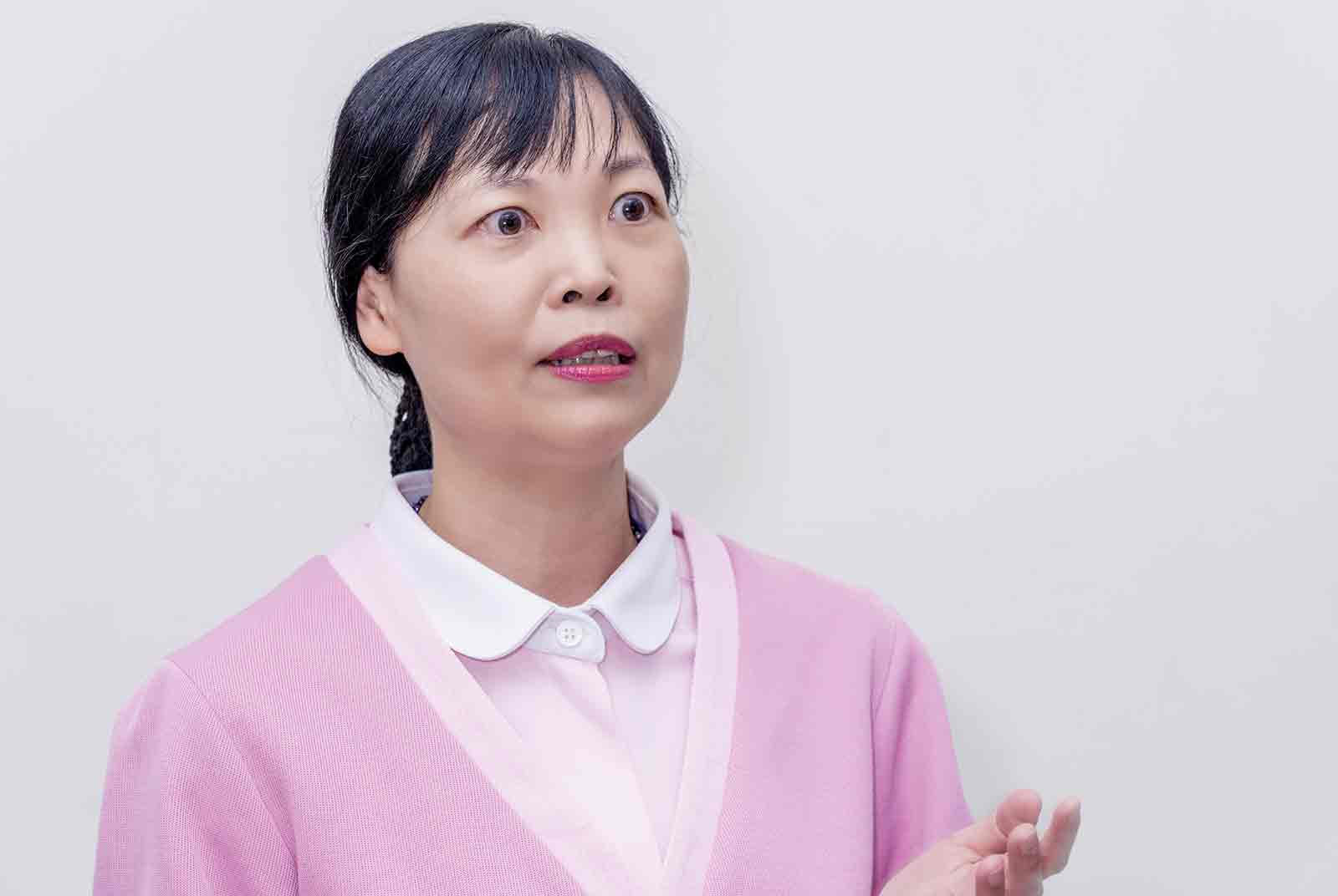 臺大醫院急診醫學部副主任及督導楊蓓菁指出,「AI讓急診過程能被醫護人員掌控,縮短病患就醫流程,醫護人員將能有更多時間與病患溝通及衛教。」
打造智慧急診流程五大關鍵
打造智慧急診流程,到底要怎麼做呢?科技部補助人工智慧技術暨全幅健康照護聯合研究中心(簡稱臺大AI中心)攜手臺大醫院急診醫學部主任黃建華醫師團隊及華碩,透過Capstone計畫打造智慧急診模式。
智慧急診流程中包含五大關鍵:
1、急診就診時,透過AI強化急診流程中的電子化檢傷,用更多儀器輔助,讓急診檢傷更加精準、即時。
2、急診診治暫留期間,快速分析病史,用電子醫療病歷結合AI,發展有效預測模式,整合病患過去病史,在醫師問診完後,系統自動提示可能的疾病。
3、即時危險辨識,從病患來診及暫留階段,綜合病患特性、過去病史、主訴、此次就診病情、生理指標、檢驗數值報告等資訊,以AI分析預測,例如病患是否有心跳停止的可能性,即時警示醫師注意病患,降低病患安全風險。
4、及早安全離部,預測病患經治療後,是否能離開急診,轉至一般病房,以及多久能出院。藉由AI技術輔助,可減少病患於急診停留的時間。
5、針對不預期緊急事件發送早期警示,建構心跳停止事件的預後評估與治療建議,例如不預期心跳停止,或是加護病房住院及急診中死亡等特定緊急事件的評估與建議。
目前AI醫療團隊已取得臺大醫院總院區、新竹及雲林分院的多中心資料進行分析驗證,並將串接醫療作業系統,能即時取得資料,準備進行臨床研究計畫,接下來希望能讓警示系統全面上線。
串連醫療數據大挑戰
事實上,醫療業發展AI,並非易事。串聯龐大醫療資料的過程中,面臨許多挑戰。黃建華主任指出,「智慧急診模式,是臺大醫院內橫跨時間最久、也最大的資料集!」如何安全分享醫院資料,又能得到AI分析結果,是一大挑戰,「目前沒有落地應用的產品,智慧急診模式正在幫臺大醫院和後人舖路。」
「我們的挑戰是資料量很大,但卻只能解決一點點的問題!」黃建華主任坦言,相較於心跳、血壓等結構化資料,臨床上有許多非結構化的片段資料,例如:頭痛、拉肚子…等等的描述性詞彙。AI如何判讀,是判斷症狀嚴重程度的關鍵。
王暉智醫師表示,急診室常見的疾病診斷約有1500至1800種,其中100種診斷就佔了80%,剩下20%診斷的資料量不夠,AI就很難有效學習。他進一步指出,「多種類型的資料,才能讓AI學會判斷多樣性的變化!」一開始臺大醫院急診醫學部將AI結合醫療系統,只是要解決流程的問題,例如急救救護系統、超音波教學等,但當時只針對各別功能開發,對整體急診運作的影響不大。
王暉智醫師分析,要改善智慧急診模式,還需要串連病患進急診室之前的資料,例如消防局的救護車,或是民眾自己記錄的健康資料。如此才能有效改善醫療流程,系統性地改善急診體系的運作,更有賴政府和各界一同努力。
隨著醫學進步發達,縮短就醫流程、增加醫護團隊方便性、提升病患安全的要求也越來越高,亦是臺大醫院急診室搭上這波AI醫療潮流的最大原因。未來,希望能用物聯網裝置,結合醫院影像資料,打造智慧急診應用場域。
 臺大醫院急診醫學部專任主治醫師王暉智分析,要改善智慧急診模式有賴政府和各界一同努力。
當AI進入急診室,將產生無限可能。未來急診室的美好想像,也將引領醫學界邁向AI革新浪潮。

Dr. Shou-De Lin is Appier’s Chief Machine Learning (ML) Scientist since February 2020 with 20+ years of experience in AI,machine learning, data mining and natural language processing. Prior to joining Appier, he served as a full-time professor at the National Taiwan University (NTU) Department of Computer Science and Information Engineering. Dr. Lin is the recipient of several prestigious research awards and brings a mix of both academic and industry expertise to Appier. He has advised more than 50 global companies in the research and application of AI, winning awards from Microsoft, Google and IBM for his work. He led or co-led the NTU team to win 7 ACM KDD Cup championships. He has over 100 publications in top-tier journals and conferences, winning various dissertation awards. After joining Appier, Dr. Lin led the AiDeal team to win the Best Overall AI-based Analytics Solution in the 2020 Artificial Intelligence Breakthrough Awards. Dr. Lin holds a BS-EE degree t from NTU and an MS-EECS degree from the University of Michigan. He also holds an MS degree in Computational Linguistics and a Ph.D. in Computer Science, both from the University of Southern California.

Titouan Parcollet is an associate professor in computer science at the Laboratoire Informatique d’Avignon (LIA), from Avignon University (FR) and a visiting scholar at the Cambridge Machine Learning Systems Lab from the University of Cambridge (UK). Previously, he was a senior research associate at the University of Oxford (UK) within the Oxford Machine Learning Systems group. He received his PhD in computer science from the University of Avignon (France) and in partnership with Orkis focusing on quaternion neural networks, automatic speech recognition, and representation learning. His current work involves efficient speech recognition, federated learning and self-supervised learning. He is also currently collaborating with the university of Montréal (Mila, QC, Canada) on the SpeechBrain project.

Mirco Ravanelli is currently a postdoc researcher at Mila (Université de Montréal) working under the supervision of Prof. Yoshua Bengio. His main research interests are deep learning, speech recognition, far-field speech recognition, cooperative learning, and self-supervised learning. He is the author or co-author of more than 50 papers on these research topics. He received his PhD (with cum laude distinction) from the University of Trento in December 2017. Mirco is an active member of the speech and machine learning communities. He is founder and leader of the SpeechBrain project.
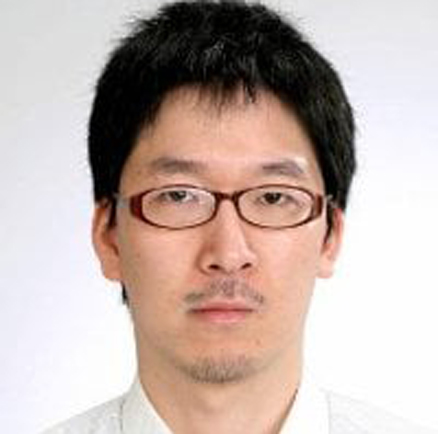
Shinji Watanabe is an Associate Professor at Carnegie Mellon University, Pittsburgh, PA. He received his B.S., M.S., and Ph.D. (Dr. Eng.) degrees from Waseda University, Tokyo, Japan. He was a research scientist at NTT Communication Science Laboratories, Kyoto, Japan, from 2001 to 2011, a visiting scholar in Georgia institute of technology, Atlanta, GA in 2009, and a senior principal research scientist at Mitsubishi Electric Research Laboratories (MERL), Cambridge, MA USA from 2012 to 2017. Prior to the move to Carnegie Mellon University, he was an associate research professor at Johns Hopkins University, Baltimore, MD USA from 2017 to 2020. His research interests include automatic speech recognition, speech enhancement, spoken language understanding, and machine learning for speech and language processing. He has been published more than 200 papers in peer-reviewed journals and conferences and received several awards, including the best paper award from the IEEE ASRU in 2019. He served as an Associate Editor of the IEEE Transactions on Audio Speech and Language Processing. He was/has been a member of several technical committees, including the APSIPA Speech, Language, and Audio Technical Committee (SLA), IEEE Signal Processing Society Speech and Language Technical Committee (SLTC), and Machine Learning for Signal Processing Technical Committee (MLSP).

Sijia Liu is currently an Assistant Professor at the Computer Science & Engineering Department of Michigan State University. He received the Ph.D. degree (with All-University Doctoral Prize) in Electrical and Computer Engineering from Syracuse University, NY, USA, in 2016. He was a Postdoctoral Research Fellow at the University of Michigan, Ann Arbor, in 2016-2017, and a Research Staff Member at the MIT-IBM Watson AI Lab in 2018-2020. His research spans the areas of machine learning, optimization, computer vision, signal processing and computational biology, with a focus on developing learning algorithms and theory for scalable and trustworthy artificial intelligence (AI). He received the Best Student Paper Award at the 42nd IEEE International Conference on Acoustics, Speech and Signal Processing (ICASSP). His work has been published at top-tier AI conferences such as NeurIPS, ICML, ICLR, CVPR, ICCV, ECCV, AISTATS, and AAAI.
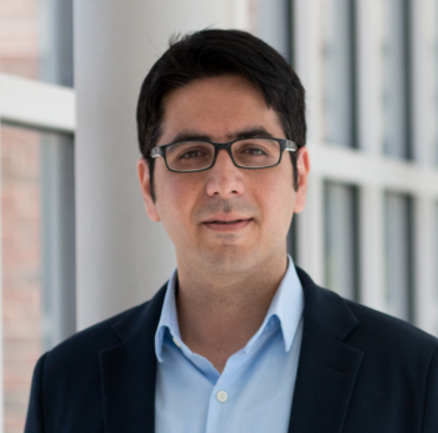
Soheil Feizi is an assistant professor in the Computer Science Department at University of Maryland, College Park. Before joining UMD, he was a post-doctoral research scholar at Stanford University. He received his Ph.D. from Massachusetts Institute of Technology (MIT). He has received the NSF CAREER award in 2020 and the Simons-Berkeley Research Fellowship on deep learning foundations in 2019. He is the 2020 recipient of the AWS Machine Learning Research award, and the 2019 recipients of the IBM faculty award as well as the Qualcomm faculty award. He is the recipient of teaching award in Fall 2018 and Spring 2019 in the CS department at UMD. His work has received the best paper award of IEEE Transactions on Network Science and Engineering, over a three-year period of 2017-2019. He received the Ernst Guillemin award for his M.Sc. thesis, as well as the Jacobs Presidential Fellowship and the EECS Great Educators Fellowship at MIT.


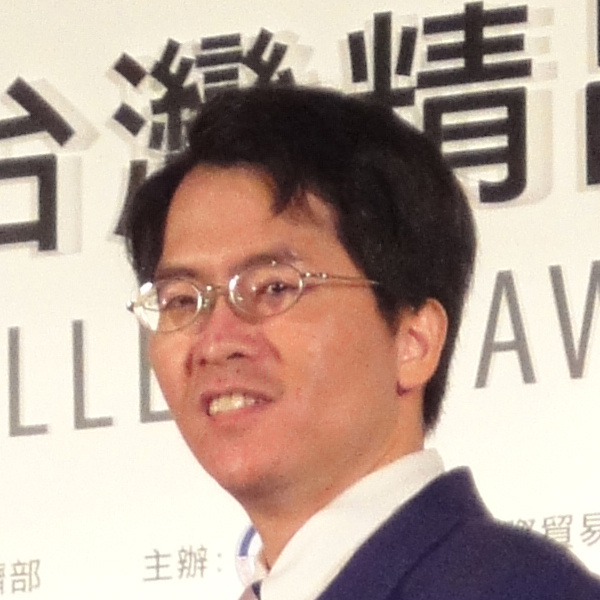
Lecture Title
Developing a World-Class AI Facial Recognition Solution – CyberLink FaceMe®
Lecture Abstract
CyberLink’s FaceMe® is a world-leading AI facial recognition solution. In this session, Davie Lee (R&D Vice President of CyberLink) will share the fundamentals of developing facial recognition solutions, such as the interface pipeline, and will share the key industrial use cases and trends of AI facial recognition.

Lecture Title
Transform the Beauty Industry through AI + AR: Perfect Corp’s Innovative Vision into the Digital Era
Lecture Abstract
Perfect Corp. is the world’s leading beauty tech solutions provider transforming the industry by marrying the highest level of augmented reality (AR) and artificial intelligence (AI) technology for a re-imagined consumer shopping experience.
Johnny Tseng (CTO of Perfect Corp.) will share the AI/AR beauty tech solutions and the roadmap with Perfect Corp.’s advance AI technology.

As the Managing Director, Jason Ma oversees Google Taiwan’s site growth, business management and development, as well as leads multiple R&D projects across the board. Before taking this leadership role at Google Taiwan, Jason was a Platform Technology and Cloud Computing expert in the Platform & Ecosystem business group at Google Mountain View, CA. In his 10 years with Google, Jason has successfully led strategic partnerships with global hardware and software manufacturers and major chip providers to drive various innovations in cloud technology. These efforts have not only contributed to a substantial increase in Chromebook’s share in global education, consumer and enterprise markets, but have also attracted global talents to join Google and its partners in furthering the development of hardware and software technology solutions/services.
Prior to joining Google, Jason served on the Office group at Microsoft Redmond, WA. He represented the company in a project, involving Merck, Dell, Boeing, and the United States Department of Defense, to achieve solutions in unified communications and integrated voice technology. In 2007, Jason was appointed Director of the Microsoft Technology Center in Taiwan. During which time, Jason led the Microsoft Taiwan technology team and worked with Intel and HP to establish a Solution Center in Taiwan to promote Microsoft public cloud, data center, and private cloud technologies, connecting Taiwan’s cloud computing industry with the global market and supply chain.
Before joining Microsoft, Jason was Vice President and Chief Technology Officer at Soma.com. At Soma.com, Jason led the team in designing and launching e-commerce services, and partnered with Merck and WebMD on health consultation services and over the counter/prescription drugs/services. Soma.com was in turn acquired by CVS, the second largest pharmacy chain in the United States, forming CVS.com, where Jason served as Vice President and Chief Technology Officer and provided solutions for digital integration.
Jason graduated from the Department of Electrical Engineering at National Cheng Kung University, subsequent which he moved to the United States to further his graduate studies. In 1993, Jason obtained a Ph.D. in Electrical Engineering from the University of Washington, with a focus in the integration and innovation of power systems and AI Expert Systems. In 1997, Jason joined the National Sun Yat-sen University as an Associate Professor of Electrical Engineering. To date, Jason has published 22 research papers and co-authored 2 books. Due to his outstanding performance, Jason was nominated and listed in Who’s Who in the World in 1998.

Dr. Yuh-Jye Lee received the PhD degree in Computer Science from the University of Wisconsin-Madison in 2001. Now, he is a professor of Department of Applied Mathematics at National Chiao-Tung University. He also serves as a SIG Chair at the NTU IoX Center. His research is primarily rooted in optimization theory and spans a range of areas including network and information security, machine learning, data mining, big data, numerical optimization and operations research. During the last decade, Dr. Lee has developed many learning algorithms in supervised learning, semi-supervised learning and unsupervised learning as well as linear/nonlinear dimension reduction. His recent major research is applying machine learning to information security problems such as network intrusion detection, anomaly detection, malicious URLs detection and legitimate user identification. Currently, he focus on online learning algorithms for dealing with large scale datasets, stream data mining and behavior based anomaly detection for the needs of big data and IoT security problems.

Prof. Hsuan-Tien Lin received a B.S. in Computer Science and Information Engineering from National Taiwan University in 2001, an M.S. and a Ph.D. in Computer Science from California Institute of Technology in 2005 and 2008, respectively. He joined the Department of Computer Science and Information Engineering at National Taiwan University as an assistant professor in 2008, and was promoted to an associate professor in 2012, and has been a professor since August 2017. Between 2016 and 2019, he worked as the Chief Data Scientist of Appier, a startup company that specializes in making AI easier in various domains, such as digital marketing and business intelligence. Currently, he keeps growing with Appier as its Chief Data Science Consultant.
From the university, Prof. Lin received the Distinguished Teaching Award in 2011, the Outstanding Mentoring Award in 2013, and the Outstanding Teaching Award in 2016, 2017 and 2018. He co-authored the introductory machine learning textbook Learning from Data and offered two popular Mandarin-teaching MOOCs Machine Learning Foundations and Machine Learning Techniques based on the textbook. His research interests include mathematical foundations of machine learning, studies on new learning problems, and improvements on learning algorithms. He received the 2012 K.-T. Li Young Researcher Award from the ACM Taipei Chapter, the 2013 D.-Y. Wu Memorial Award from National Science Council of Taiwan, and the 2017 Creative Young Scholar Award from Foundation for the Advancement of Outstanding Scholarship in Taiwan. He co-led the teams that won the third place of KDDCup 2009 slow track, the champion of KDDCup 2010, the double-champion of the two tracks in KDDCup 2011, the champion of track 2 in KDDCup 2012, and the double-champion of the two tracks in KDDCup 2013. He served as the Secretary General of Taiwanese Association for Artificial Intelligence between 2013 and 2014.

Csaba Szepesvari is a Canada CIFAR AI Chair, the team-lead for the “Foundations” team at DeepMind and a Professor of Computing Science at the University of Alberta. He earned his PhD in 1999 from Jozsef Attila University, in Szeged, Hungary. In addition to publishing at journals and conferences, he has (co-)authored three books. Currently, he serves as the action editor of the Journal of Machine Learning Research and Machine Learning and as an associate editor of the Mathematics of Operations Research journal, while also regularly serves in various senior positions on program committees of various machine learning and AI conferences. Dr. Szepesvari’s main interest is to develop new, principled, learning-based approaches to artificial intelligence (AI), as well as to study the limits of such approaches. He is the co-inventor of UCT, a Monte-Carlo tree search algorithm, which inspired much work in AI.

Arthur Gretton is a Professor with the Gatsby Computational Neuroscience Unit, and director of the Centre for Computational Statistics and Machine Learning (CSML) at UCL. He received degrees in Physics and Systems Engineering from the Australian National University, and a PhD with Microsoft Research and the Signal Processing and Communications Laboratory at the University of Cambridge. He previously worked at the MPI for Biological Cybernetics, and at the Machine Learning Department, Carnegie Mellon University.
Arthur’s recent research interests in machine learning include the design and training of generative models, both implicit (e.g. GANs) and explicit (exponential family and energy-based models), nonparametric hypothesis testing, survival analysis, causality, and kernel methods.
He has been an associate editor at IEEE Transactions on Pattern Analysis and Machine Intelligence from 2009 to 2013, an Action Editor for JMLR since April 2013, an Area Chair for NeurIPS in 2008 and 2009, a Senior Area Chair for NeurIPS in 2018 and 2021, an Area Chair for ICML in 2011 and 2012, a member of the COLT Program Committee in 2013, and a member of Royal Statistical Society Research Section Committee since January 2020. Arthur was program chair for AISTATS in 2016 (with Christian Robert), tutorials chair for ICML 2018 (with Ruslan Salakhutdinov), workshops chair for ICML 2019 (with Honglak Lee), program chair for the Dali workshop in 2019 (with Krikamol Muandet and Shakir Mohammed), and co-organsier of the Machine Learning Summer School 2019 in London (with Marc Deisenroth).

Jason Lee received his Ph.D. at Stanford University, advised by Trevor Hastie and Jonathan Taylor, in 2015. Before joining Princeton, he was a postdoctoral scholar at UC Berkeley with Michael I. Jordan. His research interests are in machine learning, optimization, and statistics. Lately, he has worked on the foundations of deep learning, non-convex optimization, and reinforcement learning.
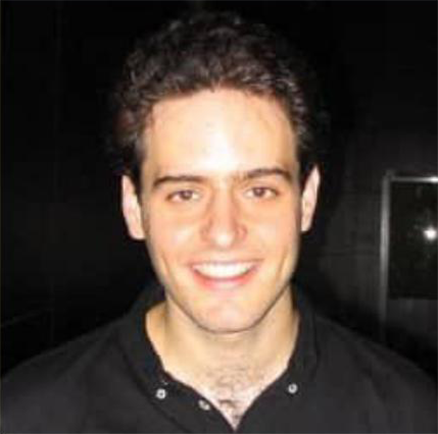
I received my Ph.D. in 11/2005 working at Ecole des Mines de Paris. Before that I graduated from the ENSAE with a master degree from ENS Cachan. I worked as a post-doctoral researcher at the Institute of Statistical Mathematics, Tokyo, between 11/2005 and 03/2007. Between 04/2007 and 09/2008 I worked in the financial industry. After working at the ORFE department of Princeton University between 02/2009 and 08/2010 as a lecturer, I was at the Graduate School of Informatics of Kyoto University between 09/2010 and 09/2016 as an associate professor (tenured in 11/2013). I have joined ENSAE in 09/2016. I now work there part-time, since 10/2018 when I have joined the Paris office of Google Brain, as a research scientist.

Chun-Yi Lee is an Associate Professor of Computer Science at National Tsing Hua University (NTHU), Hsinchu, Taiwan, and is the supervisor of Elsa Lab. He received the B.S. and M.S. degrees from National Taiwan University, Taipei, Taiwan, in 2003 and 2005, respectively, and the M.A. and Ph.D. degrees from Princeton University, Princeton, NJ, USA, in 2009 and 2013, respectively, all in Electrical Engineering. He joined NTHU as an Assistant Professor at the Department of Computer Science since 2015. Before joining NTHU, he was a senior engineer at Oracle America, Inc., Santa Clara, CA, USA from 2012 to 2015.
Prof. Lee’s research focuses on deep reinforcement learning (DRL), intelligent robotics, computer vision (CV), and parallel computing systems. He has contributed to the discovery and development of key deep learning methodologies for intelligent robotics, such as virtual-to-real training and transferring techniques for robotic policies, real-time acceleration techniques for performing semantic image segmentation, efficient and effective exploration approaches for DRL agents, as well as autonomous navigation strategies. He has published a number of research papers on major artificial intelligence (AI) conferences including NeurIPS, CVPR, IJCAI, AAMAS, ICLR, ICML, ECCV, CoRL,, ICRA IROS, GTC, and more. He has also published several research papers at IEEE Transaction on Very Large Scale Integration Systems (TVLSI) and Design Automation Conference (DAC). He founded Elsa Lab at National Tsing Hua University in 2015, and have led the members from Elsa Lab to win several prestigious awards from a number of worldwide robotics and AI challenges, such as the first place at NVIDIA Embedded Intelligent Robotics Challenge in 2016, the first place of the world at NVIDIA Jetson Robotics Challenge in 2018, the second place from the Person-In-Context (PIC) Challenge at the European Conference on Computer Vision (ECCV) in 2018, and the second place of the world from NVIDIA AI at the Edge Challenge in 2020. Prof. Lee is the recipient of the Ta-You Wu Memorial Award from the Ministry of Science and Technology (MOST) in 2020, which is the most prestigious award in recognition of outstanding achievements in intelligence computing for young researchers.
He has also received several outstanding research awards, distinguished teaching awards, and contribution awards from multiple institutions, such as NVIDIA Deep Learning institute (DLI) The Foundation for the Advancement of Outstanding Scholarship (FAOS), The Chinese Institute of Electrical Engineering (CIEE), Taiwan Semiconductor Industry Association (TSIA), and National Tsing Hua University (NTHU). In addition, he has served as the committee members and reviewers at many international and domestic conferences. His researches are especially impactful for autonomous systems, decision making systems, game engines, and vision-AI based robotic applications.
Prof. Lee is a member of IEEE and ACM. He has served as session chairs and technical program committee several times at ASP-DAC, NoCs, and ISVLSI. He has also served as the paper reviewer of NeurIPS, AAAI, IROS, ICCV, IEEE TPAMI, TVLSI, IEEE TCAD, IEEE ISSCC, and IEEE ASP-DAC. He has been the main organizer of the 3rd, 4th, and 5th Augmented Intelligence and Interaction (AII) Workshops from 2019-2021. He was the co-director of MOST Office for International AI Research Collaboration from 2018-2020.

Cho-Jui Hsieh is an assistant professor in UCLA Computer Science Department. He obtained his Ph.D. from the University of Texas at Austin in 2015 (advisor: Inderjit S. Dhillon). His work mainly focuses on improving the efficiency and robustness of machine learning systems and he has contributed to several widely used machine learning packages. He is the recipient of NSF Career Award, Samsung AI Researcher of the Year, and Google Research Scholar Award. His work has been recognized by several best/outstanding paper awards in ICLR, KDD, ICDM, ICPP and SC.
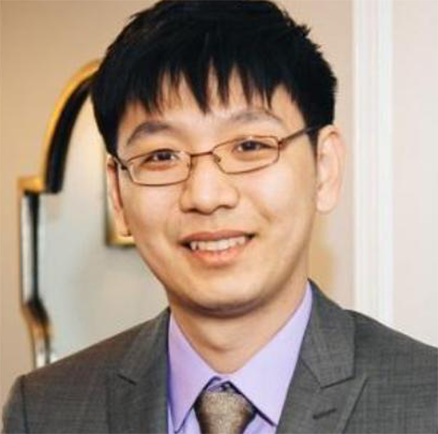
Kai-Wei Chang is an assistant professor in the Department of Computer Science at the University of California Los Angeles (UCLA). His research interests include designing robust machine learning methods for large and complex data and building fair, reliable, and accountable language processing technologies for social good applications. Dr. Chang has published broadly in natural language processing, machine learning, and artificial intelligence. His research has been covered by news media such as Wires, NPR, and MIT Tech Review. His awards include the Sloan Research Fellowship (2021),
the EMNLP Best Long Paper Award (2017), the KDD Best Paper Award (2010), and the Okawa Research Grant Award (2018). Dr. Chang obtained his Ph.D. from the University of Illinois at Urbana-Champaign in 2015 and was a post-doctoral researcher at Microsoft Research in 2016.
Additional information is available at http://kwchang.net

Short version:
Dr. Pin-Yu Chen is a research staff member at IBM Thomas J. Watson Research Center, Yorktown Heights, NY, USA. He is also the chief scientist of RPI-IBM AI Research Collaboration and PI of ongoing MIT-IBM Watson AI Lab projects. Dr. Chen received his Ph.D. degree in electrical engineering and computer science from the University of Michigan, Ann Arbor, USA, in 2016. Dr. Chen’s recent research focuses on adversarial machine learning and robustness of neural networks. His long-term research vision is building trustworthy machine learning systems. At IBM Research, he received the honor of IBM Master Inventor and several research accomplishment awards. His research works contribute to IBM open-source libraries including Adversarial Robustness Toolbox (ART 360) and AI Explainability 360 (AIX 360). He has published more than 40 papers related to trustworthy machine learning at major AI and machine learning conferences, given tutorials at IJCAI’21, CVPR(’20,’21), ECCV’20, ICASSP’20, KDD’19, and Big Data’18, and organized several workshops for adversarial machine learning. He received a NeurIPS 2017 Best Reviewer Award, and was also the recipient of the IEEE GLOBECOM 2010 GOLD Best Paper Award.
Full version:
Dr. Pin-Yu Chen is currently a research staff member at IBM Thomas J. Watson Research Center, Yorktown Heights, NY, USA. He is also the chief scientist of RPI-IBM AI Research Collaboration and PI of ongoing MIT-IBM Watson AI Lab projects. Dr. Chen received his Ph.D. degree in electrical engineering and computer science and M.A. degree in Statistics from the University of Michigan, Ann Arbor, USA, in 2016. He received his M.S. degree in communication engineering from National Taiwan University, Taiwan, in 2011 and B.S. degree in electrical engineering and computer science (undergraduate honors program) from National Chiao Tung University, Taiwan, in 2009.
Dr. Chen’s recent research focuses on adversarial machine learning and robustness of neural networks. His long-term research vision is building trustworthy machine learning systems. He has published more than 40 papers related to trustworthy machine learning at major AI and machine learning conferences, given tutorials at IJCAI’21, CVPR(’20,’21), ECCV’20, ICASSP’20, KDD’19, and Big Data’18, and organized several workshops for adversarial machine learning. His research interest also includes graph and network data analytics and their applications to data mining, machine learning, signal processing, and cyber security. He was the recipient of the Chia-Lun Lo Fellowship from the University of Michigan Ann Arbor. He received a NeurIPS 2017 Best Reviewer Award, and was also the recipient of the IEEE GLOBECOM 2010 GOLD Best Paper Award. Dr. Chen is currently on the editorial board of PLOS ONE.
At IBM Research, Dr. Chen has co-invented more than 30 U.S. patents and received the honor of IBM Master Inventor. In 2021, he received an IBM Corporate Technical Award. In 2020, he received an IBM Research special division award for research related to COVID-19. In 2019, he received two Outstanding Research Accomplishments on research in adversarial robustness and trusted AI, and one Research Accomplishment on research in graph learning and analysis.

John Shawe-Taylor is professor of Computational Statistics and Machine Learning at University College London. He has helped to drive a fundamental rebirth in the field of machine learning, with applications in novel domains including computer vision, document classification, and applications in biology and medicine focussed on brain scan, immunity and proteome analysis. He has published over 250 papers and two books that have together attracted over 80000 citations.
He has also been instrumental in assembling a series of influential European Networks of Excellence. The scientific coordination of these projects has influenced a generation of researchers and promoted the widespread uptake of machine learning in both science and industry that we are currently witnessing.
He was appointed UNESCO Chair of Artificial Intelligence in November 2018 and is the leading trustee of the UK Charity, Knowledge 4 All Foundation, promoting open education and helping to establish a network of AI researchers and practitioners in sub-Saharan Africa. He is the Director of the International Research Center on Artificial Intelligence established under the Auspices of UNESCO in Ljubljana, Slovenia.

Karteek Alahari is a senior researcher (known as chargé de recherche in France, which is equivalent to a tenured associate professor) at Inria. He is based in the Thoth research team at the Inria Grenoble – Rhône-Alpes center. He was previously a postdoctoral fellow in the Inria WILLOW team at the Department of Computer Science in ENS (École Normale Supérieure), after completing his PhD in 2010 in the UK. His current research focuses on addressing the visual understanding problem in the context of large-scale datasets. In particular, he works on learning robust and effective visual representations, when only partially-supervised data is available. This includes frameworks such as incremental learning, weakly-supervised learning, adversarial training, etc. Dr. Alahari’s research has been funded by a Google research award, the French national research agency, and other industrial grants, including Facebook, NaverLabs Europe, Valeo.
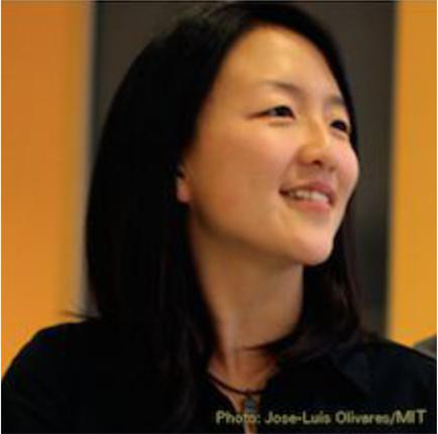
Been Kim is a staff research scientist at Google Brain. Her research focuses on improving interpretability in machine learning by building interpretability methods for already-trained models or building inherently interpretable models. She gave a talk at the G20 meeting in Argentina in 2019. Her work TCAV received UNESCO Netexplo award, was featured at Google I/O 19′ and in Brian Christian’s book on “The Alignment Problem”. Been has given keynote at ECML 2020, tutorials on interpretability at ICML, University of Toronto, CVPR and at Lawrence Berkeley National Laboratory. She was a co-workshop Chair ICLR 2019, and has been an area chair/senior area chair at conferences including NeurIPS, ICML, ICLR, and AISTATS. She received her PhD. from MIT.

I am a Research Staff Member at IBM T. J. Watson Research Center.
Prior to this, I was a Postdoctoral Researcher at the Center for Theoretical Physics, MIT.
I received my Ph.D. in 2018 from Centrum Wiskune & Informatica and QuSoft, Amsterdam, Netherlands, supervised by Ronald de Wolf. Before that I finished my M.Math in Mathematics from University of Waterloo and Institute of Quantum computing, Canada in 2014, supervised by Michele Mosca.
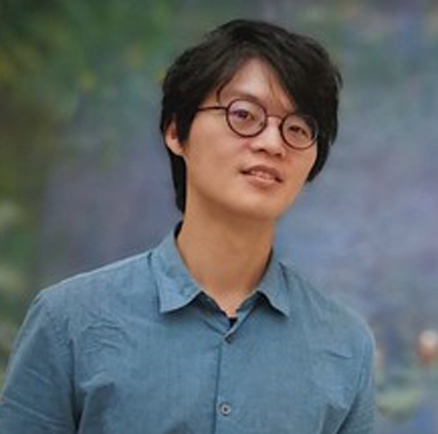
Shang-Wen (Daniel) Li is an Engineering and Science Manager at Facebook AI. His research focuses on natural language and speech understanding, conversational AI, meta learning, and auto ML. He led a team at AWS AI on building conversation AI technology for call center analytics and chat bot authoring. He also worked at Amazon Alexa and Apple Siri for implementing their conversation assistants. He earned his PhD from MIT CSAIL with topics on natural language understanding and its application to online education. He co-organized the workshop of “Self-Supervised Learning for Speech and Audio Processing” at NeurIPS (2020) and the workshop of “Meta Learning and Its Applications to Natural Language Processing” at ACL (2021).

Thang Vu received his Diploma (2009) and PhD (2014) degrees in computer science from Karlsruhe Institute of Technology, Germany. From 2014 to 2015, he worked at Nuance Communications as a senior research scientist and at Ludwig-Maximilian University Munich as an acting professor in computational linguistics. In 2015, he was appointed assistant professor at University of Stuttgart, Germany. Since 2018, he has been a full professor at the Institute for Natural Language Processing in Stuttgart. His main research interests are natural language processing (esp. speech, natural language understanding and dialog systems) and machine learning (esp. deep learning) for low-resource settings.

Philipp is an Assistant Professor in the Department of Computer Science at the University of Texas at Austin. He received his PhD in 2014 from the CS Department at Stanford University and then spent two wonderful years as a PostDoc at UC Berkeley. His research interests lie in Computer Vision, Machine learning and Computer Graphics. He is particularly interested in deep learning, image, video, and scene understanding.

Song Han is an assistant professor at MIT’s EECS. He received his PhD degree from Stanford University. His research focuses on efficient deep learning computing. He proposed “deep compression” technique that can reduce neural network size by an order of magnitude without losing accuracy, and the hardware implementation “efficient inference engine” that first exploited pruning and weight sparsity in deep learning accelerators. His team’s work on hardware-aware neural architecture search that bring deep learning to IoT devices was highlighted by MIT News, Wired, Qualcomm News, VentureBeat, IEEE Spectrum, integrated in PyTorch and AutoGluon, and received many low-power computer vision contest awards in flagship AI conferences (CVPR’19, ICCV’19 and NeurIPS’19). Song received Best Paper awards at ICLR’16 and FPGA’17, Amazon Machine Learning Research Award, SONY Faculty Award, Facebook Faculty Award, NVIDIA Academic Partnership Award. Song was named “35 Innovators Under 35” by MIT Technology Review for his contribution on “deep compression” technique that “lets powerful artificial intelligence (AI) programs run more efficiently on lowpower mobile devices.” Song received the NSF CAREER Award for “efficient algorithms and hardware for accelerated machine learning” and the IEEE “AIs 10 to Watch: The Future of AI” award.
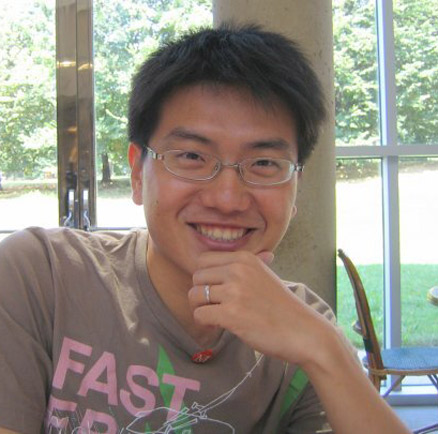
Ming-Wei Chang is currently a Research Scientist at Google Research, working on machine learning and natural language processing problems. He is interested in developing fundamental techniques that can bring new insights to the field and enable new applications. He has published many papers on representation learning, question answering, entity linking and semantic parsing. Among them, BERT, a framework for pre-training deep bidirectional representations from unlabeled text, probably received the most attention. BERT achieved state-of-the-art results for 11 NLP tasks at the time of the publication. Recently he helped co-write the Deep learning for NLP chapter in the fourth edition of the Artificial Intelligence: A Modern Approach. His research has won many awards including 2019 NAACL best paper, 2015 ACL outstanding paper and 2019 ACL best paper candidate.
Dr. Shou-De Lin is Appier’s Chief Machine Learning (ML) Scientist since February 2020 with 20+ years of experience in AI,machine learning, data mining and natural language processing. Prior to joining Appier, he served as a full-time professor at the National Taiwan University (NTU) Department of Computer Science and Information Engineering. Dr. Lin is the recipient of several prestigious research awards and brings a mix of both academic and industry expertise to Appier. He has advised more than 50 global companies in the research and application of AI, winning awards from Microsoft, Google and IBM for his work. He led or co-led the NTU team to win 7 ACM KDD Cup championships. He has over 100 publications in top-tier journals and conferences, winning various dissertation awards. After joining Appier, Dr. Lin led the AiDeal team to win the Best Overall AI-based Analytics Solution in the 2020 Artificial Intelligence Breakthrough Awards. Dr. Lin holds a BS-EE degree t from NTU and an MS-EECS degree from the University of Michigan. He also holds an MS degree in Computational Linguistics and a Ph.D. in Computer Science, both from the University of Southern California.
Lecture Title
Machine Learning as a Services: Challenges and Opportunities
Lecture Abstract
Businesses today are dealing with huge amounts of data and the volume is growing faster than ever. At the same time, the competitive landscape is changing rapidly and it’s critical for commercial organizations to make decisions fast. Business success comes from making quick, accurate decisions using the best possible information.
Machine learning (ML) is a vital technology for companies seeking a competitive advantage, as it can process large volumes of data fast that can help businesses more effectively make recommendations to customers, hone manufacturing processes or anticipate changes to a market, for example.
Machine Learning as a Service (MLaaS) is defined in a business context as companies designing and implementing ML models that will provide a continuous and consistent service to customers. This is critical in areas where customer needs and behaviours change rapidly. For example, from 2020, people have changed how they shop, work and socialize as a direct result of the COVID-19 pandemic and businesses have had to shift how they service their customers to meet their needs.
This means that the technology they are using to gather and process data also needs to be flexible and adaptable to new data inputs, allowing businesses to move fast and make the best decisions.
One current challenge of taking ML models to MLaaS has to do with how we currently build ML models and how we teach future ML talent to do it. Most research and development of ML models focuses on building individual models that use a set of training data (with pre-assigned features and labels) to deliver the best performance in predicting the labels of another set of data (normally we call it testing data). However, if we’re looking at real-world businesses trying to meet the ever-evolving needs of real-life customers, the boundary between training and testing data becomes less clear. The testing or prediction data for today can be exploited as the training data to create a better model in the future.
Consequently, the data used for training a model will no doubt be imperfect for several reasons. Besides the fact that real-world data sources can be incomplete or unstructured (such as open answer customer questionnaires), they can come from a biased collection process. For instance, the data to be used for training a recommendation model are normally collected from the feedbacks of another recommender system currently serving online. Thus, the data collected are biased by the online serving model.
Additionally, sometimes the true outcome we really care about is usually the hardest to evaluate. Let’s take digital marketing for ecommerce as an example. The most

Hung-yi Lee received the M.S. and Ph.D. degrees from National Taiwan University (NTU), Taipei, Taiwan, in 2010 and 2012, respectively. From September 2012 to August 2013, he was a postdoctoral fellow in Research Center for Information Technology Innovation, Academia Sinica. From September 2013 to July 2014, he was a visiting scientist at the Spoken Language Systems Group of MIT Computer Science and Artificial Intelligence Laboratory (CSAIL).

Henry Kautz is serving as Division Director for Information & Intelligent Systems (IIS) at the National Science Foundation where he leads the National AI Research Institutes program. He is a Professor in the Department of Computer Science and was the founding director of the Goergen Institute for Data Science at the University of Rochester. He has been a researcher at AT&T Bell Labs in Murray Hill, NJ, and a full professor at the University of Washington, Seattle. In 2010, he was elected President of the Association for Advancement of Artificial Intelligence (AAAI), and in 2016 was elected Chair of the American Association for the Advancement of Science (AAAS) Section on Information, Computing, and Communication. His interdisciplinary research includes practical algorithms for solving worst-case intractable problems in logical and probabilistic reasoning; models for inferring human behavior from sensor data; pervasive healthcare applications of AI; and social media analytics. In 1989 he received the IJCAI Computers & Thought Award, which recognizes outstanding young scientists in artificial intelligence, and 30 years later received the 2018 ACM-AAAI Allen Newell Award for career contributions that have breadth within computer science and that bridge computer science and other disciplines. At the 2020 AAAI Conference he received both the Distinguished Service Award and the Robert S. Engelmore Memorial Lecture Award.
Lecture Abstract
Each AI summer, times of enthusiasm for the potential of artificial intelligence, has led to enduring scientific insights. Today’s third summer is different because it might not be followed by a winter, and it enables powerful applications for good and bad. The next steps in AI research are tighter symbolic-neuro integration
Lecture Outline